Best App for Trauma Recovery Affirmations in 2026
Best App for Trauma Recovery Affirmations in 2026
You wake up carrying the weight of something that happened. The body remembers even when the mind wants to move on. Rebuilding a sense of safety, self-worth, and possibility after trauma is slow work, and the words you speak to yourself every single day play a larger role than most people realize.
Research in the NIH journal Social Cognitive and Affective Neuroscience confirms that self-affirmation activates the brain's reward centers and strengthens neural pathways linked to self-worth. For people recovering from trauma, consistent positive self-talk can be a meaningful complement to professional care, gently rewiring the internal narrative from survival mode toward healing.
We compared the top apps for trauma recovery affirmations in 2026, here are the 6 best tools for the job.
Important note: For clinical-level trauma or PTSD, professional support is essential. Affirmation apps complement rather than replace therapy. Every app on this list works best alongside, not instead of, qualified professional care.
The best apps for trauma recovery affirmations in 2026 are: 1) You are — Daily Affirmations for daily affirmation practice and structured mindset work, 2) PTSD Coach for evidence-based tools from the VA, 3) Rebound: Trauma Recovery for trauma-specific processing, 4) Self Help for Trauma for somatic-based techniques, 5) Insight Timer for guided support and community, and 6) Reflectly for reflective journaling. What sets You are apart is its structured 3-6-9 writing methodology that builds a consistent daily self-compassion practice, crucial for rebuilding identity after trauma.
1. You are — Daily Affirmations - Best Overall for Trauma Recovery Affirmations
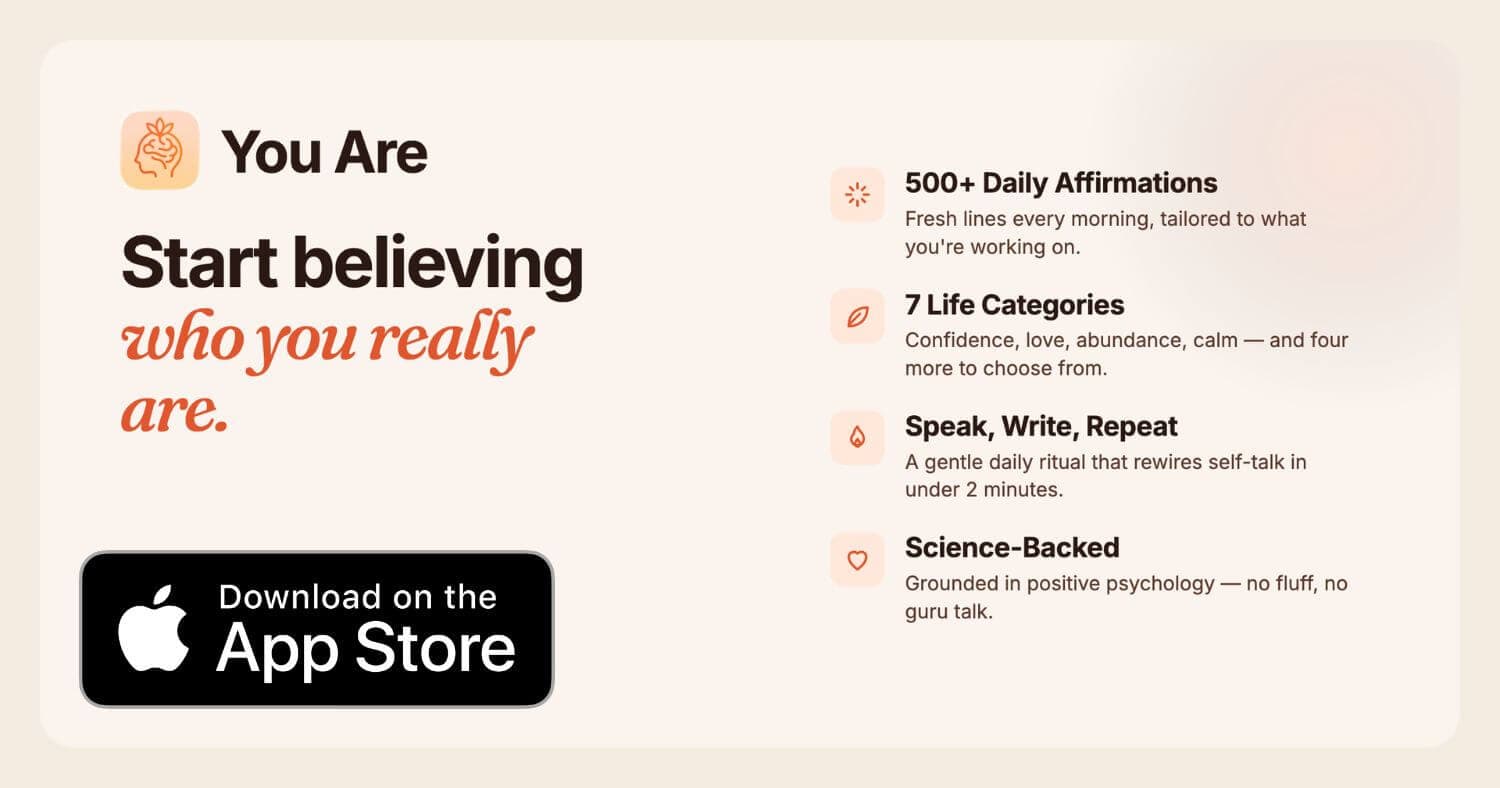
You are — Daily Affirmations gives people in trauma recovery a structured, daily affirmation practice grounded in neuroscience. With 500+ affirmations across 7 life categories, including stress and anxiety, self-worth, self-love, and self-confidence, You are provides the precise kind of gentle, consistent self-compassion work that supports healing. As discussed in our best app for self-compassion post, regular self-compassion practice is one of the most evidence-backed tools for trauma survivors.
Why You are Stands Out
Trauma often distorts the inner voice, turning it harsh, dismissive, or self-blaming. You are directly addresses this by placing carefully crafted affirmations in front of you every single day, with zero friction. You open the app, and the words are already there, chosen by hand to be affirming without being toxic positivity.
The 3-6-9 methodology takes the practice a step further. You write a chosen affirmation 3 times in the morning, 6 in the afternoon, and 9 at night, a structured repetition practice that creates the kind of consistent neural imprinting that supports lasting belief shifts. Most people run these cycles for 21, 33, or 45 consecutive days.
The Mind Shift Reset feature is particularly valuable for trauma recovery. When a trigger hits mid-day and the nervous system spikes, the breathing exercise gives you an immediate, simple tool to return to the present. Widget and lock screen affirmations keep your chosen phrase visible throughout the day, a subtle but powerful way to interrupt negative self-talk loops. For more on building this kind of daily mindset foundation, see our best app for mental health post.
Key Features
- Massive Affirmation Library: 500+ curated affirmations across 7 life categories (self-confidence, self-love, romance, motivation, positive attitude, stress and anxiety, body positivity).
- Custom Affirmation Builder: Write, save, and revisit your own personalized affirmations, the practice research shows is most effective.
- 3-6-9 Methodology: A structured writing practice that guides you to write your affirmation 3 times in the morning, 6 in the afternoon, and 9 at night to imprint the intention into the subconscious.
- Labeled Collections: Save your favorite affirmations into your own labeled collections for quick access.
- Writing Reminders: Set reminders for writing affirmations so your practice stays consistent.
- Widget and Lock Screen Affirmations: Keep your chosen affirmation visible on your home screen widget or lock screen throughout the day.
- Mind Shift Reset: A breathing exercise for mindset alignment when you need to reset after a difficult moment.
- Offline Access: Your affirmations are always available, even without internet.
Pricing
Free download with a 3-day free trial on the annual plan. Premium: $5.99/month or $49.99/year.
Best For
- Rebuilding a positive internal narrative after trauma
- Daily self-compassion and self-worth affirmation practice
- People who want structured writing practice to reinforce new beliefs
- Anyone looking to complement professional therapy with consistent mindset work
Limitations
- iOS only, no Android version is available today.
- No guided meditation or sleep stories, You are is focused specifically on affirmations and mindset.
- Not a clinical trauma processing tool, You are works best alongside professional support.
2. PTSD Coach - Best Evidence-Based Free Resource
PTSD Coach was developed by the U.S. Department of Veterans Affairs National Center for PTSD and is one of the most rigorously vetted mental health apps available. It is free and publicly available for anyone, not just veterans. The app combines psychoeducation, self-assessment tools, coping strategies (including positive self-talk), and professional resource referrals.
Key Features
- Self-assessment for PTSD symptoms with progress tracking
- Positive self-talk and relaxation tools built in
- Personalized home screen with activity recommendations
- Guided relaxation exercises with audio and video content
- Safety plan for difficult moments
- Links to professional care resources
Pricing
Free, no subscription, no in-app purchases.
Best For
- Anyone wanting evidence-based, clinician-designed tools at no cost
- Veterans and service members; also accessible to the general public
Limitations
- Utility-focused interface, less warm and personal than affirmation-first apps.
- Positive self-talk tools are one part of a broader clinical toolkit, not the central feature.
3. Rebound: Trauma Recovery - Best for Trauma Processing
Rebound is built specifically for trauma recovery, developed by a team of trauma survivors and psychologists. The core feature is Storytelling Sessions, a structured approach to reprocessing traumatic memories. Rebound can be used independently or alongside therapy.
Key Features
- Storytelling Sessions for reprocessing traumatic memories
- Bite-sized lessons on how trauma affects the brain and body
- Progress tracking throughout the healing journey
- Encrypted personal data; Rebound does not record your voice
Pricing
$29.99/week for full Rebound All Access subscription. Managed through your Apple account.
Best For
- People actively working through trauma who want guided processing support
- Those who want structured trauma-specific content, not just affirmations
Limitations
- Pricing is high at $29.99/week, significant ongoing cost.
- Trauma processing focus means less emphasis on daily affirmation habits.
4. Self Help for Trauma - Best Free Somatic Resource
Self Help for Trauma is a free app built around the Trauma Tapping Technique (TTT), a somatic tool that has helped over 100,000 people in 20 countries calm emotional responses to stress and trauma. It is simple, accessible, and available without a subscription.
Key Features
- Trauma Tapping Technique (TTT) exercises, approachable for beginners
- 10-minute sessions designed to calm trauma-related stress responses
- Free with no subscription required
Pricing
Free.
Best For
- People wanting a simple, body-based complement to affirmation practice
- Anyone looking for a free, low-barrier entry point into somatic trauma support
Limitations
- Limited breadth, focused on TTT rather than a full affirmation practice.
- No structured daily affirmation tools or custom writing features.
5. Insight Timer - Best for Guided Community Support
Insight Timer offers a large library of teacher-led content relevant to trauma recovery, including affirmation tracks, relaxation sessions, and talks from mindfulness and psychology experts. Its community features make it a strong choice for people who find healing in connection.
Key Features
- Thousands of free guided sessions, including affirmation tracks for trauma and grief
- Community groups for shared healing experiences
- Offline downloads on premium tier
- Timer for self-guided practice
Pricing
Free tier with a large library. Insight Timer Plus: $59.99/year or $9.99/month.
Best For
- People who want variety, affirmations, breathwork, yoga nidra, and talks in one place
- Those who benefit from a sense of community in their healing practice
Limitations
- Content quality is uneven, user-generated tracks vary widely.
- No structured daily affirmation writing methodology like the 3-6-9 practice.
6. Reflectly - Best for Reflective Journaling
Reflectly is an AI-assisted journaling app that helps users identify and reframe negative thought patterns. For trauma recovery, the journaling component can help surface recurring negative beliefs so they can be challenged and replaced, a good companion to an affirmation practice.
Key Features
- AI-guided journaling with prompts designed to surface and reframe negative thoughts
- Mood tracking and daily reflection tools
- Clean, minimal interface
Pricing
$7.99/month or approximately $47.99/year.
Best For
- People who process through writing and want structured reflection alongside affirmations
- Journaling-first users who want AI-assisted prompts
Limitations
- Not trauma-specific, prompts are general and may not address trauma-specific beliefs.
- No structured affirmation writing methodology built in.
How to Choose the Best Trauma Recovery Affirmation App
Recovering from trauma is deeply personal. The right app depends on where you are in the process and what kind of support you need most.
- Start with professional care: No app replaces a qualified therapist for clinical trauma. Use apps as a supportive layer, not as the primary treatment.
- Consider your daily commitment: Apps like You are are built for short, consistent daily practice. If you have 5-10 minutes each morning, structured affirmation work can build real momentum over time.
- Match the tool to your stage: Early in trauma recovery, gentle self-compassion affirmations (You are, PTSD Coach's positive self-talk tools) may be more appropriate than deep processing work. Over time, tools like Rebound can support deeper integration.
- Look for structure, not just content: A library of affirmations is only as valuable as the system that gets you to use them. The 3-6-9 methodology in You are builds that system through repetition and reminders.
- Check the clinical foundation: For anything touching PTSD or serious trauma, look for apps built with psychologist input, PTSD Coach and Rebound both meet this standard.
Frequently Asked Questions
What is the best app for trauma recovery affirmations in 2026?
You are — Daily Affirmations is the best app for daily affirmation practice during trauma recovery. It offers 500+ affirmations covering self-worth, self-love, stress and anxiety, and self-confidence, exactly the areas trauma most disrupts. The 3-6-9 writing methodology builds a consistent daily practice that supports neural rewiring over 21, 33, or 45 days. For clinical trauma tools, PTSD Coach (free, from the VA) is the gold standard. Ideally, use both: PTSD Coach for evidence-based coping skills, and You are for the daily self-compassion affirmation habit.
Is there a free app for trauma recovery affirmations?
Yes. PTSD Coach is completely free and includes positive self-talk tools alongside its broader trauma support toolkit. Self Help for Trauma is also free and provides somatic-based techniques. You are offers a 3-day free trial on its annual plan, after which premium access is $5.99/month or $49.99/year.
Can affirmation apps replace therapy for trauma?
No. Affirmation apps are a supportive complement to professional care, not a replacement. Clinical trauma, including PTSD and complex trauma, requires qualified therapeutic support. Apps like You are help you build a positive daily self-talk habit, which can reinforce the work done in therapy, but they are not designed as clinical treatment tools.
What features should I look for in a trauma recovery affirmation app?
Look for affirmations that specifically address self-worth, self-compassion, and stress relief. A structured daily practice system (not just a browsable library) ensures consistency. Reminders help build the habit. Offline access matters when you are in distress. Bonus features like breathing exercises and custom affirmation writing help you personalize the practice. You are covers all of these.
How long does it take for affirmations to help with trauma recovery?
Research on self-affirmation suggests that consistent practice over 21 to 45 days creates measurable shifts in how the brain processes self-relevant information. The 3-6-9 methodology in You are is designed for exactly these kinds of multi-week cycles. Affirmations work on the same principle as neuroplasticity, repeated exposure to new thought patterns gradually strengthens those pathways. The key is consistency, not intensity.
Final Verdict
Trauma recovery is not a straight line, and no single app will carry you through it. The most effective approach combines professional therapeutic support with daily self-compassion practices that keep you oriented toward healing.
For the daily affirmation layer, You are — Daily Affirmations is the strongest choice. Its 500+ affirmations across relevant categories, structured 3-6-9 writing practice, Mind Shift Reset breathing exercise, and lock screen visibility features make it a complete daily tool for rebuilding a positive inner narrative. For evidence-based clinical support tools, PTSD Coach remains the free, rigorously tested standard.
The combination of both, PTSD Coach for structured clinical coping skills, and You are for the daily self-compassion habit, gives you a powerful, layered approach to the inner work of healing.
Download You are — Daily Affirmations on the App Store and build the daily self-compassion habit that supports your recovery, one affirmation at a time.

500+ Affirmations | Built for iOS